💰 Money-Making Guide
Coins grow in Fairhaven the way anything grows: patiently, and best when you understand the soil. This page presses the island’s most profitable specimens between its pages, from crop economics to gemstones. Remember the golden rule of Wylde Flowers finance: because seasons only change when you cast the ritual, you can farm a profitable season for as long as you like.
Field notes — the short answer
Pick one engine per season and let it run:
| Season | The engine | Why |
|---|---|---|
| Spring | Wheat | Best spring crop (20.8 coins/day) |
| Summer | Cotton → cloth | Best earner in the game (~39/day), once you have a loom |
| Fall | Fennel | Best fall crop (24.2/day; ~29.5 in a greenhouse) |
| Winter | Spinach | Best winter crop (27.5/day) |
| All year | Fruit trees + beehives | Earn in the background while you do everything else |
Then follow one rule: process before you sell. Sell raw only what you can’t process, cook, or gift. For step-by-step versions, see Recommended Farm Plans.
🌾 Crops: The Reliable Backbone
Measured in coins earned per day of growth, the standouts are:
| Crop | Season | Approx. profit | Why it shines |
|---|---|---|---|
| Cotton → Cloth | Summer | ~39 coins/day | The best earner in the game — but only after processing into cloth on the loom |
| Strawberry | Summer | ~28.7 coins/day | The best straight-sale crop in the almanac |
| Spinach | Winter | ~27.5 coins/day | The best winter crop, from 3-coin seeds |
| Fennel | Fall & Winter | ~24 coins/day | The best fall crop, and a close second in winter |
| Wheat | Spring | ~20.8 coins/day | The pick of the spring beds |
| Sunflowers | Summer | best summer flower | Strong sale price, and flowers feed your bees while they bloom |
For the full per-season ledger — seed costs, growth times, and every crop’s coins/day — see the Crop Guide. To run the numbers for your plan — your season, your length of stay, your number of beds — try the interactive Crop Profit Calculator.
Working principles:
- Cotton only pays once it’s woven. Raw cotton is unremarkable; woven into cloth it becomes the island’s best money-per-day. Keep the loom busy (Crafting Stations).
- Fennel and spinach carry the cold seasons. Plant fennel wall-to-wall in fall, switch to spinach in winter, and simply linger in those seasons while the coins accumulate. (In a greenhouse, out-of-season fennel climbs to about 29.5/day, since off-season produce sells at a premium.)
- Flowers pay twice. A blooming flower left unharvested feeds your beehives, producing honey and beeswax on the side (Bees & Orchards). Sunflowers in summer are the pick of the bunch.
don’t cast the ritual while the fennel’s still paying rent ❀
🧀 Artisan Processing
As a rule of thumb across the island’s economy: processed goods out-earn raw ingredients. Before selling anything raw, ask whether a crafting station could improve it first:
- Milk and eggs into finished goods; ores into ingots at the Blacksmith; beeswax into candles; cotton into cloth.
- Cooking can also add value — some recipes sell for more than the sum of their ingredients, and cooked food doubles as energy for longer working days.
- See Artisan Goods for the full catalog of what transforms into what.
🐄 Animal Products
Animals are steady, low-effort income once established: daily eggs, milk, and wool with only feeding and affection asked in return. Two notes from the ledger:
- Happy animals are productive animals — keep up the daily attention (Animals).
- Kim’s butcher shop will buy adult animals for coins and resources, useful when the barn is full or the ledger is thin (Shops).
🎣 Fishing
Fishing is honest supplementary income — no seeds to buy, no beds to water. Catches vary in value by species and location, and rarer fish fetch better prices. It shines early game (before your farm scales up) and as a use for evening hours. See Fishing.
- Cook the common catch into fish sticks. The kitchen’s fish sticks recipe accepts any fish, so a bucketful of cheap, common catches cooks up into dishes worth more than the fish that went into them (Cooking). Batch-cook the everyday catch and sell the sticks; save the rare fish for the compendium, gifts, and quests.
the river is on your own farm — a free bait-to-fish-sticks pipeline before breakfast 🐟
⛏️ Mining & Gems
The mine beside your farmhouse runs many levels deep:
- Ores are usually worth more as ingots, and more still as upgraded tools that speed up everything else — often the better “investment” than a straight sale.
- Gems are the mine’s cash crop: sell the spares, but note some are wanted for quests, gifts, and witchcraft — check before liquidating.
- Details in Mining & Foraging.
📋 Quests & To-Dos
Neighbors’ to-do quests pay coins for things you’re often producing anyway. Completing them steadily is real income — the game even celebrates bulletin milestones — and every quest builds friendship alongside the fee. Check for new requests regularly and match them to your surplus.
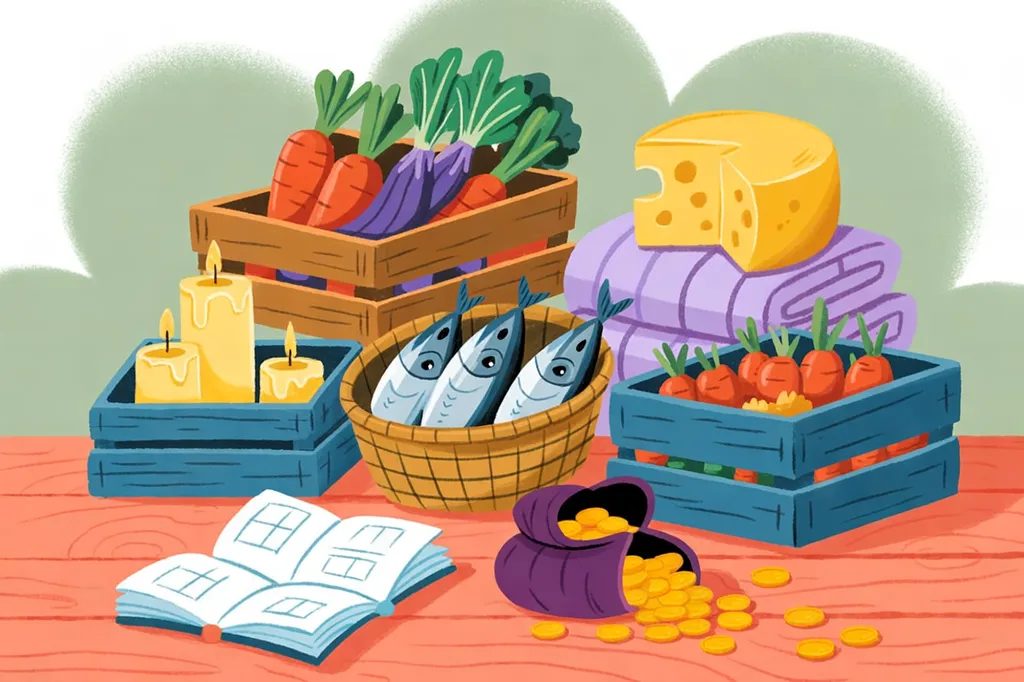
🏪 Where to Sell What
A harvest only becomes coins once it finds the right counter. Fairhaven’s shopkeepers each deal in their own trade, so match the item to its shop (Shops & Services):
| What you’re selling | Take it to |
|---|---|
| Crops, produce & artisan goods (cheese, candles) | Dahl General Store — Lina’s counter is the farm’s main outlet |
| Fish | Soft and Son’s Fish & Tackle — Bruno pays honest rates for the catch |
| Cooked dishes (fish sticks included) | Cafe Moretti — Sophia’s counter for cooked dishes |
| Baked goods | Seton’s Bakery — Angus happily buys your desserts |
| Cloth & finery | Kai’s Treasures — the merchant with an eye for fine fabric |
| Meat & adult animals | Kim’s Local Butcher and Deli — or Marty, for the well-loved |
| Forage & beach finds | Shelby’s Scraps and Sundries, in the woods |
| Ores, ingots & gems | The Blacksmith — Natalia’s counter, where ore is also smelted into ingots |
Two habits keep the ledger honest:
- Check the to-do board before the till. A neighbor’s quest often pays more for the same item than any shop will — in coins and friendship.
- Shops keep daytime hours. Plan selling errands into your town rounds rather than making a special evening trip to a locked door.
🗓️ A Season-by-Season Sketch
| Season | Money strategy |
|---|---|
| Spring | Wheat in the beds; establish crops and infrastructure; fish and forage to fill gaps. |
| Summer | Strawberries and cotton for the loom; sunflowers for bees and sale. |
| Fall | Fennel fields; harvest everything before any ritual. |
| Winter | Spinach fields; lean on artisan goods, animals, and the mine. |
Lore aside: Hazel kept this farm afloat for decades without min-maxing a single coin.
sign-off tip: pick ONE engine per season — wheat, cloth, fennel, or spinach — and give it most of your beds ❀
Last updated